Home / What is: GLP-1 Injections
What is:What are GLP-1 injections?
The short answerGLP-1 injections are prescription medications, like semaglutide and tirzepatide, that copy a natural gut hormone to quiet hunger, help you feel full sooner, and help manage blood sugar. They're a small injection under the skin, once a week. At Onus, they're prescribed under nurse practitioner oversight after a free consultation.
Updated November 2026 · 3-minute read
In 30 seconds
GLP-1 injections, simplified
A hormone copy
They mimic GLP-1, a hormone your gut makes after you eat.
Quieter food noise
Most people feel full sooner and think about food less.
One shot a week
A small injection under the skin that you give at home.
Medically supervised
Your provider sets the dose and adjusts it over time.
The science
How do GLP-1 injections work?
GLP-1 (glucagon-like peptide-1) is a hormone that tells your brain you've eaten. GLP-1 medications bind to the same receptors and amplify that signal.
1. You take your weekly dose
A small injection under the skin, at a dose your provider sets.
2. It copies GLP-1
The medication binds to GLP-1 receptors in your gut and brain.
3. Your body responds
Your stomach empties more slowly, hunger signals quiet down, and blood sugar steadies.
Your options
Semaglutide vs. tirzepatide
Both are once-weekly GLP-1 medications. The difference is how many pathways they target. Your provider helps you choose.
Semaglutide
Quiets constant hunger, slows stomach emptying, and helps manage blood sugar. Often chosen for stubborn plateaus and food noise.
Tirzepatide
A two-pathway approach for stronger appetite control. Often chosen after a plateau on GLP-1 alone or with a higher starting BMI.
Take the quiz
Answer a few questions and see which option may fit your goals. Not medical advice.
What to expect
How fast do GLP-1 injections work?
Getting started
- Injection walkthrough at onboarding
- Low starting dose
Appetite settles
- Most patients notice less appetite and fewer cravings
First check-in
- Review progress and side effects
- Dose adjusted if appropriate
Finding your rhythm
- Most significant results as dosing is titrated
Individual results vary and depend on consistency, nutrition, and continued medical oversight.
Is it a fit?
Who are GLP-1 injections for?
May be a good fit if you have
- A BMI of 27+ with a weight-related health condition, or 30+
- Constant hunger, cravings, or food noise
- Prediabetes or insulin resistance
- A weight-loss plateau despite real effort
Talk to your provider first if you
- Are pregnant, nursing, or planning to be
- Have certain thyroid conditions in your history
- Take other prescription medications
Safety
Do GLP-1 injections have side effects?
Yes. The most common are digestive, like nausea, constipation, or an upset stomach, and they tend to show up in the early weeks or after a dose increase. Starting low and increasing slowly helps, and your provider adjusts your dose at each check-in. Hydration and electrolyte support can also help in the first weeks.
Key terms
- GLP-1
- Glucagon-like peptide-1, a gut hormone that signals fullness and helps regulate blood sugar.
- GIP
- A second gut hormone that tirzepatide also targets.
- Food noise
- Constant, intrusive thoughts about food and eating.
- Satiety
- The feeling of being full and satisfied after eating.
- Titration
- Starting at a low dose and increasing it gradually.
- Subcutaneous injection
- A small shot just under the skin, how GLP-1s are given.
Myth vs. fact
Common GLP-1 myths
MythGLP-1s are only for diabetes.
FactSemaglutide and tirzepatide are also prescribed for weight management and metabolic health.
MythThe shot does all the work.
FactResults are best with good nutrition, enough protein, and hydration.
MythAn online script is the same thing.
FactAt Onus, a licensed provider reviews your history and checks in every month.
MythIt works overnight.
FactAppetite often changes in 1 to 2 weeks, but the biggest results usually take 3 to 6 months.
Pricing
How much do GLP-1 injections cost?
The consultation is free. Your monthly price depends on the medication and your dose.
| Medication | Pathways | Price per month |
|---|---|---|
| Semaglutide | GLP-1 | $250 - $450 |
| Tirzepatide | GLP-1 + GIP | $425 - $950 |
Semaglutide starts at $62.50 per week. Prescribed only after a consultation with a licensed provider.
GLP-1 injections FAQ
What are GLP-1 injections?
GLP-1 injections are prescription medications, like semaglutide and tirzepatide, that copy a natural gut hormone to quiet hunger, help you feel full sooner, and help manage blood sugar. They're given as a small injection under the skin once a week.
How often do you take GLP-1 injections?
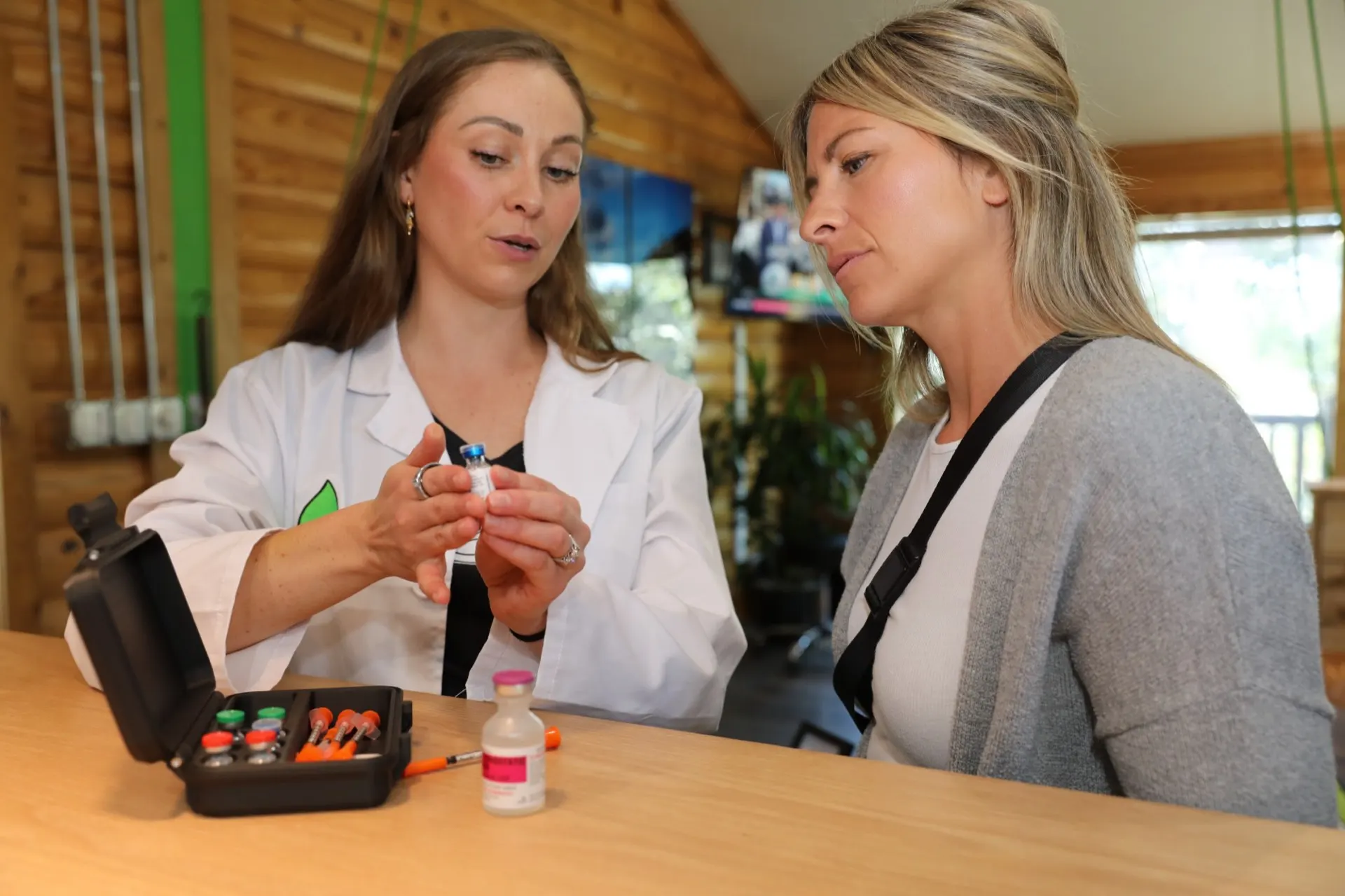
Once a week. Your provider and nurse show you how to give the injection yourself at your onboarding visit.
How fast do GLP-1 injections work?
Most patients notice less appetite within the first 1 to 2 weeks. The most significant results usually come between months 3 and 6 as the dose is adjusted. Results vary.
What's the difference between semaglutide and tirzepatide?
Semaglutide targets one pathway (GLP-1). Tirzepatide targets two (GLP-1 and GIP). Your provider helps you choose based on your goals, history, and budget.
What are the side effects of GLP-1 injections?
The most common side effects are digestive, like nausea, constipation, or an upset stomach, usually in the early weeks or after a dose increase. Your provider adjusts your dose to help.
How much do GLP-1 injections cost?
At Onus, semaglutide is $250 to $450 per month and tirzepatide is $425 to $950 per month, depending on your dose. The consultation is free.
Where can I get GLP-1 injections in Denver?
Onus offers GLP-1 injections at all 7 Colorado locations: LoHi, Wheat Ridge, Boulder, Denver Tech Center, Central Park, Highlands Ranch, and Fort Collins.
What states do you serve for telemedicine?
We provide telemedicine services for residents of Colorado.
Your best days are still ahead.
Talk with a licensed provider about whether GLP-1 injections fit your goals. Free consultation at any of our 7 Colorado locations.
Book a Free Consult