
What Do Vitamin D Injections Actually Do?
Vitamin D isn't really a vitamin in the traditional sense. It behaves more like a hormone, and once it's in your bloodstream it binds to the vitamin D receptor found in tissue throughout your body, which is part of why it affects so many systems at once. Here's what adequate levels of this essential nutrient help with:
- Heart health. Vitamin D helps regulate blood pressure, and some research has linked low levels to a higher risk of cardiovascular issues.
- Bone strength. Vitamin D supports calcium absorption, which your body needs to build and maintain strong bones and teeth. Without enough of it, bones and teeth weaken over time, which matters more the older you get.
- Immune function. Vitamin D supports immune function by helping modulate immune responses and supporting white blood cells as they fight pathogens, which is one of several benefits linked to healthy levels.
- Mood and cognitive function. Vitamin D plays a role in brain development and mental sharpness, is involved in mood regulation and mental health, and low levels have been associated with mood changes, depression, and a higher risk of cognitive decline later in life.
- Muscle function. Vitamin D levels are linked to muscle function and strength, which is part of why athletes ask about it so often.
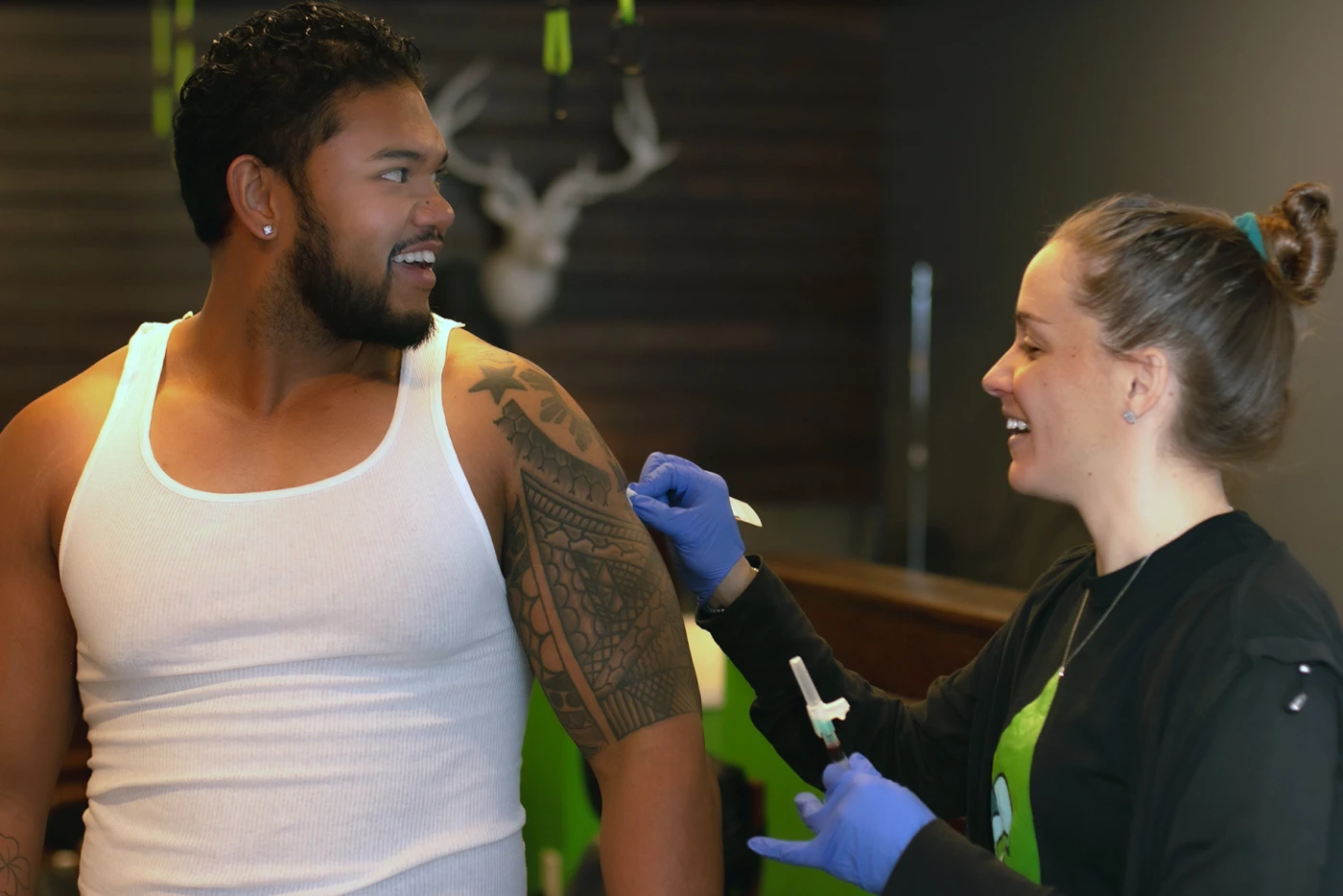
A vitamin D3 injection is a high-dose intramuscular injection of vitamin D3 designed to deliver vitamin D directly into your muscle and then your bloodstream, which means your body can start using it right away instead of waiting on digestion.
Vitamin D2 vs. D3: What's the Difference?
You'll see two forms of vitamin D on labels and in research: D2 (ergocalciferol) and vitamin D3 (cholecalciferol). Both occur naturally, but D2 comes from plants and fungi, while D3 is the form your own body makes and the form found in animal sources. D3 is generally considered more effective at raising and maintaining your blood levels, and vitamin D injections can elevate levels more efficiently than oral supplements to help maintain adequate levels and support optimal levels, which is why it's the form used in vitamin D injections like the ones we offer at Onus.
Signs You Might Be Running Low
- Low vitamin D is one of the most common deficiencies we see, and it's easy to miss because the symptoms overlap with a lot of other things. Common signs include:
- Persistent fatigue or low energy that doesn't improve with sleep
- Bone pain or aching joints
- Muscle weakness or cramping
- Frequent illness or getting sick more often than usual
- Mood changes, including low mood or irritability
- Trouble sleeping well
If several of these sound familiar, it's worth asking your provider for blood tests to measure your current vitamin D levels before injections instead of assuming a shot will fix it. A healthcare provider can determine whether a shot makes sense based on symptoms, test results, and whether vitamin D deficiency is actually the issue. We run panels regularly at Onus, and a lot of clients are surprised by how low their numbers come back, myself included.
Why a Shot Beats Sunlight, Food, Oral Supplements, or Pills for Most People
Vitamin D earned its nickname, the sunshine vitamin, because your skin makes it in response to direct sunlight, but the amount you produce depends on the season, the time of day, your skin tone, cloud cover, and how much skin you actually have exposed. Sunscreen, which you should still wear, also blocks the UVB rays your skin needs to make vitamin D in the first place. Food sources exist too, mainly fatty fish, fortified dairy, and beef liver, and limited sun exposure, diet, dietary restrictions, or not getting enough from certain foods can all lower vitamin D status. Still, most people don't eat nearly enough of those foods to make a real dent in a deficiency.
Oral supplementation helps, but it has to survive digestion before your body can use it, and absorption varies a lot from person to person, especially for people with medical conditions who have trouble absorbing nutrients. Patients with gastrointestinal conditions may not absorb vitamin D well through the digestive system. A D3 shot skips that step entirely, which can help address deficiency because injections bypass the digestive system and can deliver higher doses more directly than regular vitamin pills. It goes directly into muscle tissue and into your bloodstream, so you get more consistent, immediate availability than you would from a daily pill.
Does Vitamin D Actually Improve Athletic Performance and Immune Function?
This one deserves an honest answer instead of a marketing one. The research on vitamin D and sports performance is genuinely mixed. If you're deficient, correcting that deficiency has clear, well established benefits for bone health, muscle function, and recovery. That part isn't controversial.
Where it gets murkier is whether pushing vitamin D levels higher than normal actually boosts performance in someone who isn't deficient to begin with. Some smaller studies have found modest improvements in measures like VO2 max or reduced muscle damage after hard efforts, while larger reviews pooling multiple trials haven't found a consistent performance benefit once a deficiency is already corrected. Our take: if you're an athlete and you're low on vitamin D, fixing that is worth doing for your health regardless of any performance angle. Just don't expect a shot to turn into a magic performance enhancer if your levels were already fine.
Who Should Consider a Vitamin D Shot
A vitamin D3 shot is worth considering if any of these apply to you:
- You know you're deficient, whether from a recent blood panel or a doctor's recommendation, especially if a severe vitamin deficiency has been identified and shots are being considered to address vitamin levels more quickly.
- You spend most of your time indoors and don't get much regular sun exposure.
- You wear sunscreen daily, which is smart for your skin but limits your body's own vitamin D production.
- You have digestive issues that make it hard to absorb nutrients from food or oral supplements, including some medical conditions that impair absorption, which is why injections vitamin support may be considered instead of a regular vitamin approach.
- You're exploring broader wellness options and want care matched to your needs, with a personalized treatment plan that may include review after testing and follow up; for some people, regular vitamin D shots may also come up in care discussions, including those with autoimmune diseases.
Where to Get Vitamin D Shots in Colorado
At Onus IV Therapy + Longevity, D3 shots are available at all of our Colorado locations, including LoHi, Wheat Ridge, Boulder, the Denver Tech Center, Highlands Ranch, and Fort Collins, plus our mobile concierge service if you'd rather have someone come to you. We offer a full menu of vitamin injections and other vitamin therapy services beyond D3, so feel free to ask our staff about stacking add-ons or other wellness options during your visit. You can check pricing and details on our D3 shot page or just walk into any location 7 days a week. No appointment needed, though you're welcome to book ahead if you'd rather not wait.
Every shot is administered by an ER certified nurse or nurse practitioner, so you're in experienced hands whether this is your first vitamin D injection or your fiftieth, and vitamin D shots are generally safe when administered by professionals.
What to Expect at Your Appointment
The process is simple. If this is your first vitamin injection with us, our team will walk you through what to expect, ask about your health goals, check for any known deficiencies, and review your health history and treatment plan to determine the right dose of vitamin D rather than guessing. If you want confirmation before starting, we can run a quick blood panel to check your vitamin D level first. Because vitamin D is fat-soluble, medical supervision matters since excessive amounts can cause toxicity.
Many clients get their D3 shot as an add on after a panel done for hormone optimization or general wellness screening, especially since the recommended daily dose is 600 to 800 IU and shots should be individualized to ensure adequate amounts. The injection itself takes just a couple of minutes, there's no real downtime, and you can go straight back to your day afterward. Possible minor side effects include tenderness or redness at the injection site, and severe allergic reactions are rare but possible, with follow-up if needed to recheck levels after treatment.
Ready to Add a Vitamin D Shot to Your Routine?
Whether you're dealing with a confirmed deficiency, you spend most of your time indoors, or you just want a simple way to support your overall health through the winter, a D3 shot is one of the easiest things you can add to your routine. Visit our D3 shot page for current pricing, or stop by your nearest Onus location 7 days a week. We're here to help you feel your best.